
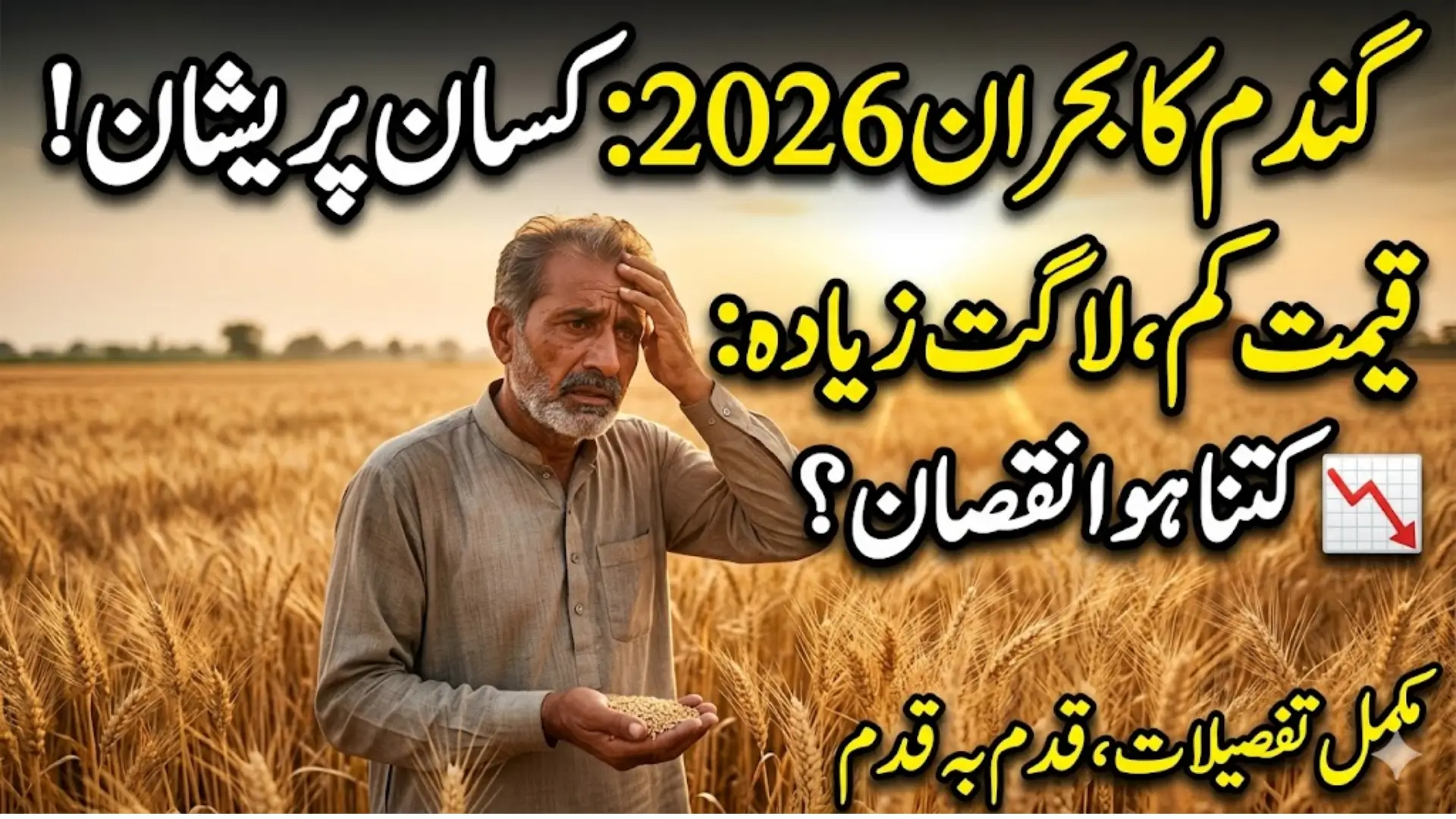
Farmers Protest Low Wheat Prices 2026
Farmers Protest Low Wheat Prices 2026 Punjab’s wheat season in 2026 has started under growing tension, as farmers across the province are facing a serious financial crisis. Instead of celebrating a good harvest, many growers are worried about how they will recover their costs. During field visits and conversations with farmers, one common concern is being repeated again and again: the price of wheat is too low to cover expenses. This has turned what should have been a profitable season into a period of uncertainty and stress.
Wheat is not just another crop in Pakistan; it is the main food staple and a key pillar of the rural economy. Every year, millions of farmers depend on wheat production for their livelihood. When prices fall below expectations, it directly impacts their income, their families, and the overall agricultural system. In 2026, this imbalance between cost and price has triggered protests and strong reactions from the farming community.
Government Wheat Procurement Plan 2025-26
The Punjab government has announced that it will procure three million tonnes of wheat this season, with operations starting from April 15. According to officials, procurement centers will be fully functional and ready to facilitate farmers. The plan aims to stabilize the market and provide an opportunity for farmers to sell their wheat at a controlled rate.
However, when talking to farmers, many expressed doubts about whether this procurement target is sufficient. In past years, government procurement played a major role in supporting prices, but this time the reliance on the private sector is higher. Farmers fear that this shift may reduce their chances of selling wheat at fair rates, especially when market conditions are already unfavorable.

- Procurement target set at 3 million tonnes
- Official procurement to begin from April 15
- Centers promised to be operational across Punjab
- Increased reliance on private sector participation
Expected Bumper Wheat Production
Agriculture officials have indicated that this year’s wheat crop is expected to be strong due to favorable weather conditions. Fields across Punjab have shown good growth, and many farmers have reported higher yields compared to previous years. On the surface, this should be a positive development for the agricultural sector.
But the reality on the ground tells a different story. A bumper crop often leads to an increase in supply, and if proper pricing mechanisms are not in place, this can result in falling market prices. That is exactly what farmers are experiencing right now. Despite producing more wheat, they are earning less, which has created frustration and disappointment.

Rising Cost of Wheat Production
One of the most critical issues this year is the rising cost of wheat production. Farmers explain that every stage of cultivation has become more expensive. From land preparation to harvesting, the cost has increased significantly due to inflation and rising fuel prices.
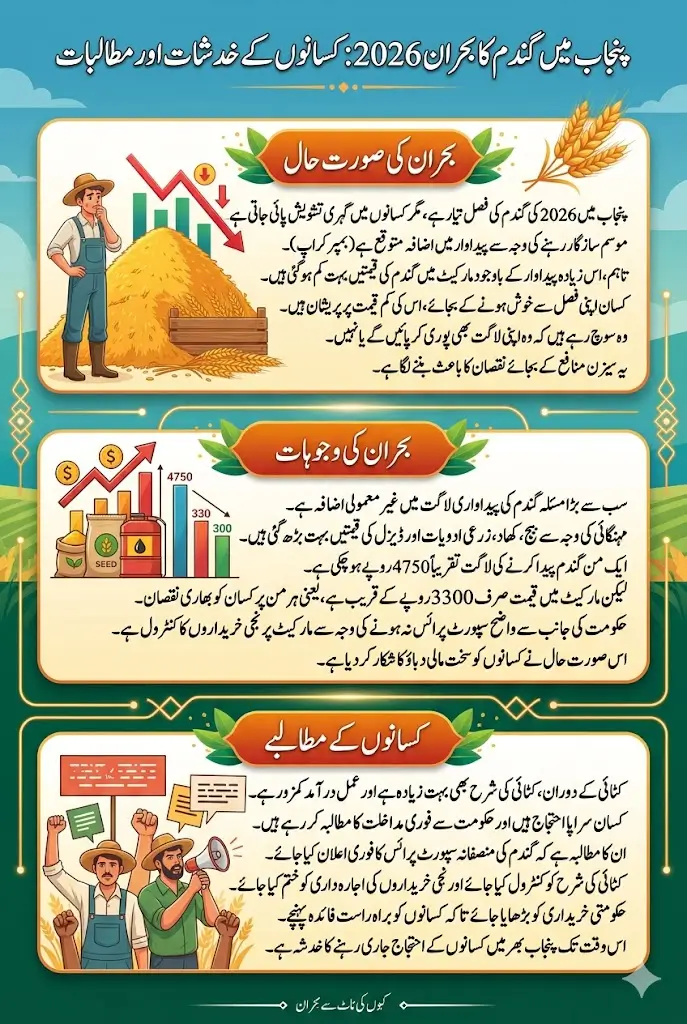
On average, farmers claim that the cost of producing one maund of wheat has reached around Rs4,750. This includes expenses on seeds, fertilizers, pesticides, irrigation, and labor. For small farmers, these costs are even harder to manage, as they often rely on borrowed money. When the final selling price does not match these costs, it results in direct financial loss.
- High diesel prices increased tractor and transport costs
- Fertilizers and pesticides remained expensive
- Labor wages increased due to inflation
- Water and irrigation charges added extra burden
Sharp Decline in Market Wheat Prices
While costs are rising, wheat prices in the market are moving in the opposite direction. Farmers report that the current market rate has dropped to around Rs3,300 per maund. This is a significant decline, especially when compared to the cost of production.
This gap between cost and price has become the main reason behind the protests. Farmers are forced to sell their wheat at whatever rate they can get because they need cash for daily expenses and loan repayments. This situation leaves them with little bargaining power and increases their financial stress.
Price Gap Analysis
| Category | Amount (Rs per Maund) |
|---|---|
| Average Production Cost | 4,750 |
| Current Market Price | 3,300 |
| Estimated Loss | 1,450 |
This simple comparison clearly shows why farmers are calling this season a loss-making period.
Farmers’ Concerns Over Lack of Support Price
A major reason behind the crisis is the absence of a clear support price from the government. In previous years, the announcement of a minimum support price helped protect farmers from market fluctuations. This year, however, no such clear policy has been communicated.
Farmers believe that without a support price, the market is being controlled by traders and middlemen. This has reduced transparency and increased exploitation. Many farmers shared that they feel unprotected and ignored, despite their role in ensuring food security for the country.
Role of Private Sector in Wheat Procurement
The government’s increased reliance on the private sector for wheat procurement has added another layer of uncertainty. While this approach may reduce pressure on government resources, it does not guarantee fair pricing for farmers.
Private buyers usually focus on profit margins, which means they try to purchase wheat at the lowest possible price. Farmers often face issues such as delayed payments, unfair deductions, and lack of accountability. In the current situation, this system is not providing the support farmers need.
- Private buyers dominate open market transactions
- Lack of price control leads to lower rates
- Payment delays are commonly reported
- Farmers have limited negotiating power
Harvesting Costs and Machinery Issues
Harvesting is another major expense that farmers have to bear. Although the government has set certain guidelines for harvesting charges, their implementation remains weak. Farmers report that harvester owners are charging higher rates than prescribed.
During peak harvesting season, the demand for machinery increases sharply. Without proper monitoring, service providers take advantage of this demand and raise their prices. Farmers are left with no choice but to pay these rates, as delaying harvesting can damage their crop.
Voices from Farmer Representatives
Farmer representatives and agricultural leaders have openly criticized the current situation. They argue that the government has not taken their concerns seriously, especially regarding the support price. According to them, policies should be designed in consultation with farmers to ensure practical solutions.
On the ground, farmers are expressing frustration and disappointment. Many say that despite working hard and producing a good crop, they are not receiving fair returns. This growing dissatisfaction is leading to protests and demands for immediate action.
Government’s Response and Policy Gaps
The government has assured that procurement centers will be fully operational and that farmers will receive necessary support. Officials have also warned service providers against overcharging. These steps are meant to address some of the concerns raised by farmers.
However, there are clear gaps between announcements and implementation. Farmers believe that without strict monitoring and timely decisions, these measures will not solve the problem. What they need is immediate relief, not just promises.
Step-by-Step Breakdown of the Current Situation
The current wheat crisis has developed in a clear sequence, which helps in understanding the situation better. It started with rising production costs and was followed by falling market prices. The absence of a support price further worsened the situation, leading to protests by farmers.
- Wheat crop becomes ready for harvest
- Input and production costs increase significantly
- Market prices drop below expectations
- No official support price announced
- Farmers begin protests and demand action
What Farmers Are Demanding
Farmers are demanding practical and immediate solutions to their problems. Their demands are based on the need to recover costs and ensure a stable income. They believe that without government intervention, the situation may worsen in the coming years.





- Announcement of a fair support price
- Strict regulation of harvesting charges
- Increased government role in procurement
- Protection from exploitation by middlemen
Conclusion: The Way Forward
The wheat crisis of 2026 in Punjab highlights the challenges faced by farmers in a changing economic environment. While production has improved, the lack of proper pricing policies has created serious problems. Farmers are not only struggling financially but also losing confidence in the system.
A balanced and timely response from the government can still improve the situation. By ensuring fair prices, controlling costs, and strengthening procurement systems, the trust of farmers can be restored. This is important not only for the farming community but also for the food security and economic stability of Pakistan.