Maryam Nawaz Free Transport in 17 Districts
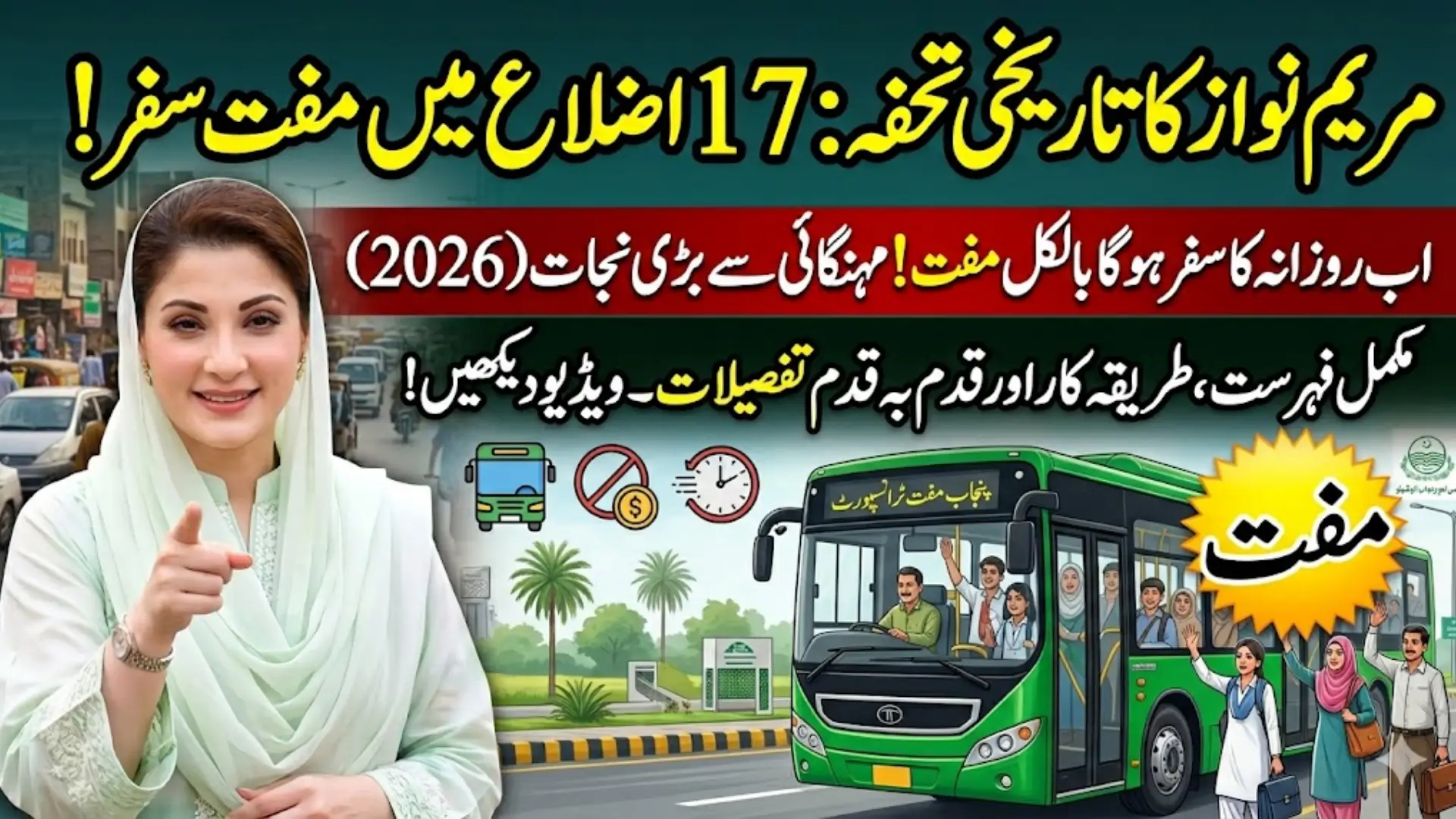
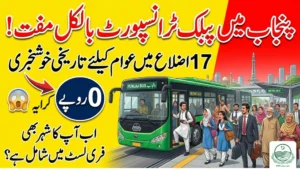
Maryam Nawaz Free Transport in 17 Districts Punjab government has taken a major relief step by approving free transport services in 17 districts. This decision, led by Chief Minister Maryam Nawaz Sharif, comes at a time when inflation and rising fuel prices have made daily travel difficult for ordinary citizens. From what I have seen on the ground, transport costs are one of the biggest concerns for people who travel daily for work, education, and small businesses.
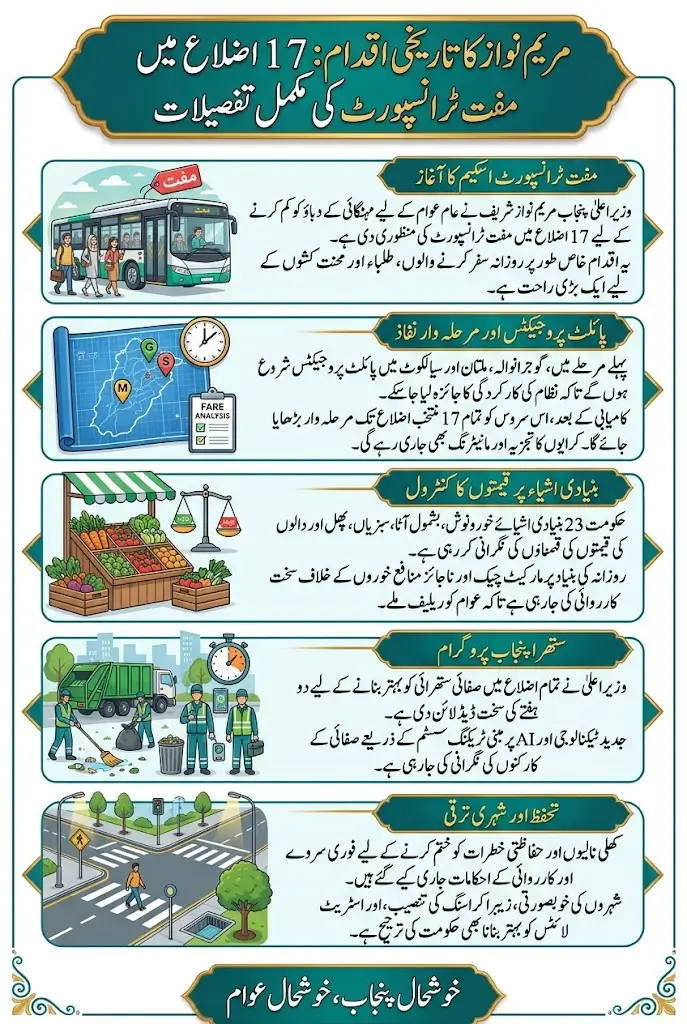
This initiative is not just about providing free rides; it is part of a broader plan to ease financial pressure on the public. The government is trying to address multiple issues at once, including transport costs, food prices, and sanitation conditions. The goal is simple: to make life easier for the common citizen who is struggling to manage household expenses.
- Free transport planned in 17 districts
- Relief focused on daily commuters and low-income groups
- Part of a wider public welfare and inflation control strategy
Why Free Transport Was Approved Across Punjab
The decision to provide free transport did not come suddenly. It is based on a detailed review of how rising petrol and diesel prices are affecting transport fares. When fuel prices increase, transporters immediately raise fares, and this creates a chain reaction that affects every household. People end up spending a large portion of their income just to travel from home to work or school.
In many districts, especially smaller cities and rural areas, there are limited transport options. This makes the situation even more difficult. The government realized that without intervention, the burden on the public would continue to grow. By introducing free transport, authorities are directly targeting one of the biggest monthly expenses for families.
- Fuel price increase directly raised transport fares
- Daily wage earners and students most affected
- Government stepped in to reduce financial burden
List and Coverage of 17 Districts
The free transport service will be introduced in 17 districts across Punjab. Although the complete list is still being finalized, the selection is being made based on population needs, transport demand, and economic conditions. Areas where people are facing the most difficulty in commuting are being prioritized.
The government is also ensuring that the program is not limited to major cities only. Semi-urban and less developed districts are also being included so that the benefits reach a wider population. This balanced approach is important for fair distribution of resources and public relief.
- 17 districts selected for initial phase
- Focus on both urban and semi-urban areas
- Expansion expected after evaluation of first phase
Pilot Projects in Major Cities
Before implementing the project across all districts, pilot projects have been approved in Gujranwala, Multan, and Sialkot. These cities have been chosen because of their large population and high transport demand.
Pilot testing is a practical step that allows the government to understand real challenges such as route planning, passenger flow, operational costs, and management issues. Based on these findings, improvements will be made before expanding the service to other districts. This careful planning increases the chances of success.
- Pilot cities selected for testing system efficiency
- Helps identify operational challenges
- Ensures better planning before full rollout
Step-by-Step Implementation Plan
The government is following a structured step-by-step plan to implement the free transport scheme. Instead of rushing into full implementation, authorities are focusing on planning, testing, and monitoring. This approach reduces the chances of failure and ensures that the system runs smoothly.
In the first phase, approvals and planning have been completed. The next phases include fare analysis, pilot testing, monitoring, and finally expansion to all selected districts. Each step is being handled carefully to avoid mismanagement and ensure transparency.
| Phase | Key Activity | Purpose |
|---|---|---|
| Phase 1 | Approval and planning | Policy formation and groundwork |
| Phase 2 | Fare analysis per km | Understanding transport cost structure |
| Phase 3 | Pilot projects | Testing in selected cities |
| Phase 4 | Monitoring | Performance evaluation |
| Phase 5 | Expansion | Province-wide implementation |
- Gradual implementation strategy
- Strong focus on monitoring and evaluation
- Expansion based on pilot results
Transport Fare Review and Government Monitoring
The Punjab government has also ordered a detailed report on transport fares per kilometer within 24 hours. This shows how serious the authorities are about understanding the real cost of transportation and ensuring fairness. Even though transport will be free in selected areas, fare analysis is important for long-term planning.
District administrations will play a key role in monitoring transport operations. They will ensure that services are running properly and that there is no misuse of resources. Transparency and accountability are being emphasized at every level.
- 24-hour deadline for fare report
- District authorities responsible for monitoring
- Transparency in transport system
Price Control Measures on Essential Items
Along with transport relief, the government is focusing heavily on controlling the prices of essential food items. A detailed review of 23 items, including vegetables, fruits, and pulses, has been conducted across all districts, including Lahore. This step is crucial because food expenses are a major part of every household’s budget.
From market observations, prices often fluctuate due to hoarding or supply issues. The government is now actively monitoring these changes to ensure stability. By controlling food prices, authorities are providing additional relief alongside free transport.
- Monitoring prices of 23 essential items
- Daily market checks across districts
- Focus on affordability for common people
Comparison of Flour Prices Across Provinces
During the meeting, a detailed comparison of flour prices was also presented. Punjab currently offers flour at significantly lower rates compared to other provinces. This is mainly due to better supply management and availability of wheat stocks within the province.
Lower flour prices directly benefit low-income households, as flour is a basic necessity in every home. The government’s efforts to maintain stable supply have helped in keeping prices under control, which is a positive sign for consumers.
- Punjab flour cheaper than other provinces
- Strong supply chain management
- Direct relief for households
Government Action Against Inflation and Hoarding
The government has taken strict measures to control inflation and prevent hoarding of essential items. Authorities have been directed to take immediate action against those who artificially increase prices. This is a common issue in many markets, where traders take advantage of demand.
Public awareness is also being increased so that people avoid buying overpriced items. When both government action and public cooperation work together, it becomes easier to control inflation effectively.
- Crackdown on hoarders and profiteers
- Strict enforcement of official prices
- Public encouraged to report overpricing
LPG Price Regulation Strategy
LPG prices have also been included in the government’s control measures. In many areas where natural gas is not available, people depend on LPG for cooking and heating. Any increase in LPG prices directly affects household expenses.
The government has instructed authorities to monitor LPG rates and ensure that they remain within reasonable limits. This step will provide relief to both urban and rural populations.
- Monitoring LPG prices across Punjab
- Action against illegal price increases
- Relief for households without gas supply
Sanitation Reforms Under Suthra Punjab Program
Sanitation has become a major focus under the Suthra Punjab program. The Chief Minister has expressed concern over poor cleanliness conditions in several cities and has given a strict two-week deadline for improvement. From what I have observed, garbage and waste management remain serious issues in many areas.
The government is now taking practical steps to ensure cleanliness, including better waste collection systems and monitoring of sanitation workers. Clean cities not only improve health conditions but also create a better living environment.
- Two-week deadline for sanitation improvement
- Focus on waste removal and cleanliness
- Monitoring of sanitation performance
Action Against Open Drainage and Safety Hazards
One of the most serious concerns highlighted in the meeting was the danger caused by open drainage and stagnant water. There have been incidents where such conditions led to loss of lives, which raised serious questions about safety.
Assistant commissioners have been directed to survey every street and identify dangerous areas. Deputy commissioners will be held responsible if safety measures are not implemented. This strict accountability system shows that the government is taking the issue seriously.
- Survey of stagnant water and unsafe ponds
- Safety measures in every union council
- Strict responsibility on local administration
Urban Development and Beautification Projects
The government is also working on beautification and development projects in cities like Faisalabad, Rahim Yar Khan, and Attock. These projects aim to improve infrastructure, remove encroachments, and enhance the overall appearance of cities.
Some cities have shown good progress, while others need more attention. The government has set a deadline of June to complete all ongoing projects. This focus on development shows a long-term vision for improving urban life.
- Beautification projects across multiple cities
- June deadline for completion
- Focus on infrastructure and environment
Digital Monitoring and AI-Based Tracking System
To improve efficiency, the government has introduced digital mapping and AI-based tracking systems. These systems will monitor sanitation workers in real time and ensure that work is being done properly. This is a modern approach that increases transparency and accountability.
Technology is playing an important role in governance, and this step shows that Punjab is moving towards smarter management systems. It will help authorities respond quickly to problems and improve service delivery.
- AI-based monitoring system introduced
- Real-time tracking of workers
- Improved efficiency and accountability
Additional Public Welfare Directives
The government has also issued several additional directives to improve public facilities. These include tree plantation campaigns, control of dog bite cases, installation of zebra crossings, and improvement of street lighting. These steps may seem small, but they have a big impact on daily life.
Such measures show that the government is focusing on overall public welfare, not just one area. By addressing multiple issues together, better results can be achieved.
- Tree plantation for environmental improvement
- Road safety measures like zebra crossings
- Better street lighting and public facilities
Government Accountability and Performance Monitoring
A strict monitoring system has been introduced where commissioners are required to submit daily reports with photographs. This ensures that all instructions are being followed properly and work is being completed on time.
Any negligence will be treated seriously, and action will be taken against responsible officials. This level of accountability is necessary to ensure that policies are not just announced but actually implemented.
- Daily reporting with photographic evidence
- Strict action against poor performance
- Strong accountability system
Public Response and Expected Benefits
The public response to these initiatives is expected to be positive. Free transport will directly reduce travel expenses, while price control measures will help families manage their budgets more effectively. Improved sanitation and development projects will also enhance living conditions.
From a practical point of view, these steps can bring noticeable change in daily life if implemented properly. People are hopeful that the government will deliver on its promises.
- Reduced cost of daily travel
- Better control over food prices
- Improved living standards
Conclusion
The decision to launch free transport in 17 districts is a major step towards public relief in Punjab. Along with price control, sanitation improvements, and development projects, it reflects a comprehensive approach to governance under Maryam Nawaz Sharif.
If these initiatives are implemented effectively, they can provide long-term benefits to the people of Punjab. The coming months will be important in determining the success of this plan, but the direction clearly shows a strong focus on public welfare and economic relief.