
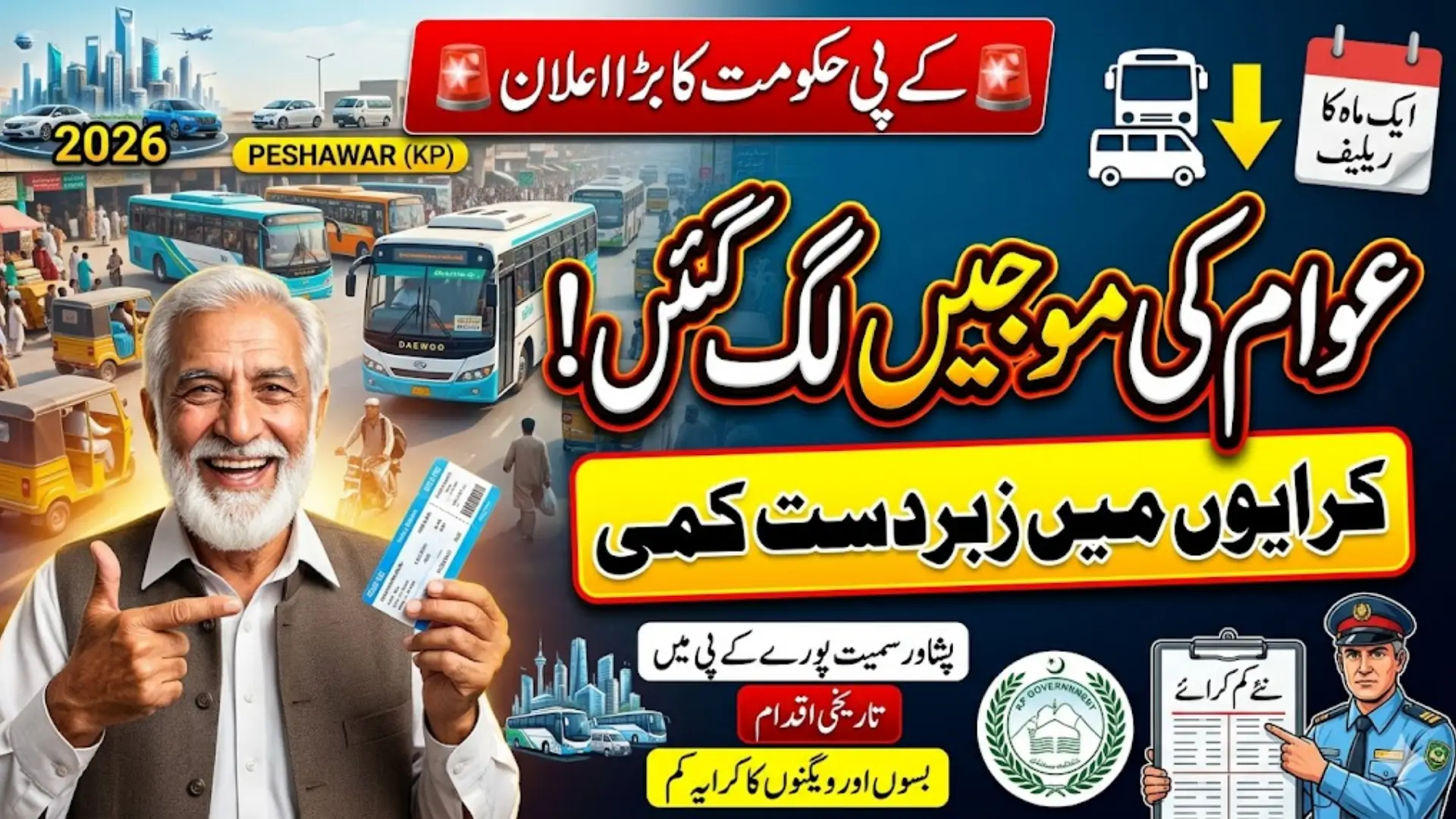
KP Govt Announces One-Month Tax Relief
KP Govt Announces One-Month Tax Relief Khyber Pakhtunkhwa government has taken a significant step by announcing a one-month waiver of key taxes for the transport sector in 2026. This move is being seen as a direct relief package for the general public, especially for those who rely heavily on public transport for daily travel. In recent months, rising fares have made commuting difficult for many citizens, particularly students, laborers, and low-income families.
From what has been observed across major routes and local transport stands, passengers were increasingly complaining about inconsistent and high fares. The government’s decision appears to be a response to these concerns, aiming to bring immediate ease to commuters. By reducing operational costs for transporters, authorities expect that the benefit will be passed on to passengers in the form of lower fares.
This initiative is not just about temporary relief; it also reflects an effort to improve the overall transport system. With proper monitoring and strict enforcement, the government wants to ensure that every citizen feels the impact of this decision during the one-month period.
What Taxes Have Been Waived?
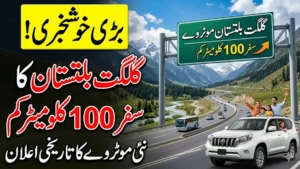
The relief package includes the complete waiver of schedule tax and stand tax for one month across all districts of Khyber Pakhtunkhwa. These taxes are part of the regular expenses that transporters pay to operate legally, and they often contribute to the final fare charged to passengers.

By removing these taxes temporarily, the government has reduced the financial burden on transport operators. In return, transporters have been clearly instructed to adjust their fares and provide direct relief to the public. This step ensures that the benefit is not limited to transport owners but reaches the common citizen.
This policy applies uniformly across the province, covering both urban and rural routes. Whether someone is traveling within a city or between districts, the expectation is that they will experience reduced fares during this period.
- Schedule tax waived for one month
- Stand tax removed across all districts
- Relief applicable on all types of public transport
- Immediate implementation ordered by authorities
Key Decision Taken by Regional Authorities
The decision was finalized during a high-level meeting chaired by the Commissioner of Peshawar Division, who also serves as Chairman of the Regional Transport Authority. The meeting was conducted through a video link, allowing officials from different districts to participate and align on a unified strategy.
During the meeting, various challenges faced by passengers were discussed in detail. Authorities reviewed reports from field visits and considered complaints related to overcharging and fare inconsistencies. After careful consideration, it was decided that a tax waiver combined with strict monitoring would be the most effective solution.
This decision highlights the importance of coordination between different administrative levels. It also shows that the government is focusing not only on policy-making but also on practical implementation. Such steps are crucial to ensure that relief measures translate into real benefits for the public.
- Decision made through a province-wide coordination meeting
- Led by Commissioner Peshawar Division
- Regional Transport Authority played a central role
- Focus on immediate and visible public relief
Direct Benefit for Passengers
For the general public, this decision brings immediate financial relief. Transporters have been instructed to reduce fares according to the tax exemption, ensuring that passengers pay less for their daily travel. This is especially important in the current economic situation, where even small savings can make a big difference for households.
Passengers traveling on buses, vans, and wagons are expected to notice reduced ticket prices. For daily commuters, this means lower monthly transport expenses, which can help manage household budgets more effectively. In areas where people rely on long-distance travel for work, the impact is expected to be even more significant.
From a ground-level perspective, such measures often restore public confidence in the system. When people see that government decisions are directly improving their daily lives, trust in institutions naturally increases.
- Reduced fares on public transport
- Relief for daily wage earners and students
- Lower cost of intercity travel
- Immediate financial ease for families
Strict Monitoring Mechanism Introduced
To ensure that transporters fully comply with the new policy, the government has introduced a strict monitoring system. Authorities understand that without proper enforcement, such relief measures may not reach the public effectively.
Three assistant commissioners have been assigned to each district with the responsibility of checking fares at transport stands and along major highways. These officers will conduct regular inspections and take action against any violations. In addition, deputy commissioners have been directed to personally oversee these operations, ensuring accountability at every level.
This strong monitoring framework indicates that the government is serious about implementation. It also sends a clear message to transporters that overcharging will not be tolerated under any circumstances.
- Three assistant commissioners deployed per district
- Regular inspections at bus stands and highways
- Deputy commissioners to supervise operations
- Immediate action against overcharging
New Instructions for Transporters
Transporters have been given clear guidelines to follow during this relief period. One of the most important instructions is the mandatory display of the government-approved fare list on the front of every vehicle. This step is aimed at increasing transparency and empowering passengers.
With fare lists visibly displayed, passengers can easily verify whether they are being charged correctly. This reduces the chances of disputes and ensures a fair system for everyone. Transporters are also expected to cooperate fully with inspection teams and follow all directives strictly.
Such measures not only protect passengers but also create a more organized and trustworthy transport environment. When rules are clear and visible, compliance becomes easier and more effective.
- Display official fare list on every vehicle
- Follow reduced fares without exception
- Avoid overcharging passengers
- Cooperate with government inspection teams
Field Visits and Ground-Level Checks
The foundation of this decision lies in recent field visits conducted by authorities. Officials visited transport stands, GT Road, and motorway routes in Peshawar to observe the situation firsthand. These visits revealed several issues, including inconsistent fares and lack of proper monitoring.
By directly engaging with passengers and transport operators, authorities were able to understand the real challenges faced on the ground. This practical approach helped in designing a policy that addresses actual problems rather than theoretical concerns.
Such field-based decision-making is essential for effective governance. It ensures that policies are relevant, targeted, and capable of delivering real results.
Ensuring Uniform Fare Implementation
One of the main goals of this initiative is to ensure that reduced fares are implemented uniformly across all districts. In the past, passengers often faced different fare rates for similar routes, leading to confusion and frustration.
The government has now directed all districts to follow a standardized fare system during the relief period. This means that passengers can expect consistent pricing regardless of where they are traveling within the province.
| Transport Category | Previous Situation | New Implementation Under Relief |
|---|---|---|
| Urban Transport | Different fares in each area | Reduced and standardized fares |
| Intercity Routes | Frequent overcharging | Strictly controlled pricing |
| Bus Terminals | Weak monitoring | Strong inspections in place |
| Highways Routes | Fare inconsistencies | Uniform fare enforcement |
This uniform approach not only benefits passengers but also simplifies operations for transporters. It creates a fair and balanced system that works for everyone.
Expected Impact on Transport Sector
The one-month tax relief is expected to have a positive impact on both passengers and transporters. While passengers benefit from lower fares, transporters receive financial relief through tax exemptions, which helps balance their operational costs.
This dual benefit approach is important for the long-term stability of the transport sector. It encourages transporters to comply with government policies while ensuring that the public receives immediate relief.
In addition, improved fare transparency and strict monitoring are likely to reduce complaints and disputes. This can lead to a more efficient and reliable transport system across the province.



- Financial relief for transport operators
- Lower travel costs for passengers
- Improved trust between public and transporters
- Better regulation and transparency
Conclusion: A Step Towards Public Relief
The KP government’s decision to provide a one-month tax waiver for the transport sector is a timely and impactful move. It directly addresses the challenges faced by passengers while also supporting transport operators through reduced financial burden.
However, the true success of this initiative depends on consistent implementation and strict monitoring. If authorities maintain their current level of vigilance and transporters follow the rules honestly, this policy can deliver meaningful relief to millions of people.