
Pakistan Telecommunication Authority
Pakistan Telecommunication Authority is quietly moving toward a major transformation as the Pakistan Telecommunication Authority introduces a new licensing framework for Mobile Virtual Network Operators (MVNOs). This policy is not just another regulatory update; it represents a shift from traditional telecom infrastructure to a more flexible and digital-first system where companies can offer mobile services without owning towers or spectrum. For ordinary users in Pakistan, this could mean more choices, better pricing, and easier access to mobile services.
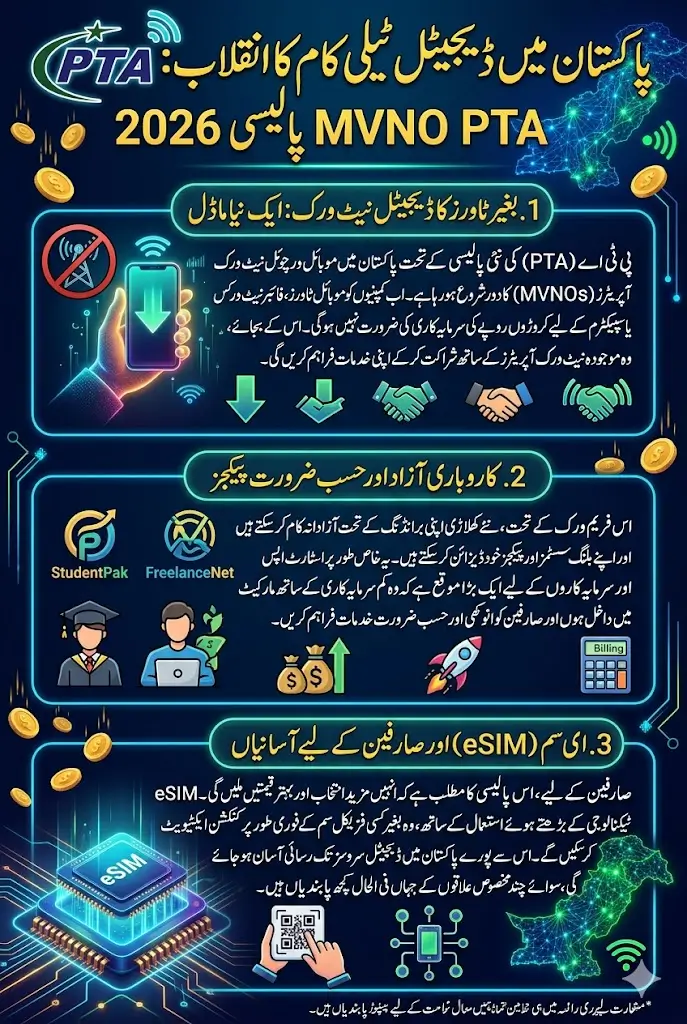
In practical terms, “no physical networks” means that new telecom companies will not need to build expensive infrastructure like towers, fiber networks, or spectrum systems. Instead, they will partner with existing telecom operators and use their networks to deliver services. This reduces costs significantly and allows new businesses, including startups, to enter the telecom market. Alongside this, the growing use of eSIM technology will make it even easier for users to activate connections instantly without needing physical SIM cards.

This development is particularly important for Pakistan, where digital adoption is increasing rapidly. From mobile banking to online education, connectivity has become essential. The MVNO model combined with eSIM can make telecom services more accessible, especially for people in smaller cities and rural areas who often face limited options.
Punjab Govt Fuel Subsidy of Rs. 150 per Liter

What is an MVNO and How It Works in Pakistan
A Mobile Virtual Network Operator (MVNO) is a company that provides telecom services like calls, SMS, and mobile internet without owning the actual network infrastructure. Instead of building towers or purchasing spectrum licenses, MVNOs sign agreements with existing telecom companies, known as Mobile Network Operators (MNOs), to use their networks. This arrangement allows MVNOs to focus on customer service, branding, and innovative packages while the technical network is handled by the partner operator.
In Pakistan, this model is expected to open the telecom sector to new players who previously could not afford the high costs of infrastructure. For example, a company could launch a telecom brand specifically designed for students, freelancers, or small businesses, offering customized packages and digital services. Since the network is already available, the company can focus on improving user experience rather than building physical systems.

Key characteristics of MVNOs include:
- No ownership of telecom towers or spectrum
- Dependence on agreements with licensed network operators
- Ability to create unique pricing and service models
- Focus on customer experience and digital platforms
This model is already successful in many countries, and Pakistan is now preparing to adopt it in a structured and regulated manner.
Maryam Nawaz Free Transport in 17 Districts Full Details
Key Features of the New PTA MVNO License Framework
The proposed MVNO license framework by PTA introduces several features that aim to balance innovation with regulatory control. One of the most important aspects is that companies can operate under their own brand name while using another operator’s network. This means users may see entirely new telecom brands in the market, even though the underlying infrastructure remains the same.
Another important feature is operational independence. MVNOs will be allowed to manage their own billing systems, customer support services, and package designs. This independence is expected to encourage creativity and competition, as companies will try to attract customers through better services rather than relying only on network coverage.
Main features of the framework include:
- No requirement to invest in physical telecom infrastructure
- Permission to operate under independent brand identity
- Full control over customer service and billing systems
- Flexibility to introduce innovative and niche packages
These features make the MVNO model highly attractive for businesses looking to enter the telecom market with limited capital but strong digital capabilities.
Realme 16 5G Camera Battery Specs And Price In Pakistan
Coverage Scope and Operational Limits
Under the proposed rules, MVNOs will be allowed to provide telecom services across Pakistan, but there are certain geographical limitations. Specifically, services will not initially be available in Azad Jammu and Kashmir and Gilgit-Baltistan. These exclusions are likely due to regulatory and administrative considerations that may be addressed in future phases.
To operate, MVNOs must sign commercial agreements with one or more licensed telecom operators. This means their service quality and coverage will depend heavily on the network they partner with. For users, this could result in different MVNOs offering similar coverage but different pricing and service quality based on their agreements and business models.
Important operational conditions include:
- Nationwide service availability except restricted regions
- Mandatory partnership with licensed telecom operators
- Dependence on host network for coverage and performance
This structure ensures that while new players can enter the market, the overall telecom infrastructure remains stable and regulated.
License Fee and Financial Requirements Explained
The PTA has set clear financial requirements to ensure that only serious and capable companies enter the MVNO market. The initial license fee is $140,000, which is significantly lower than traditional telecom licenses but still ensures commitment from applicants. In addition to this one-time fee, operators must pay annual contributions based on their revenue.
These contributions are designed to support national telecom development, including expanding services to underserved areas and funding research initiatives. While these costs may seem high for small businesses, they are considered reasonable compared to the potential market opportunities.
Key financial obligations include:
- One-time license fee of $140,000
- Annual license fee of 0.5% of gross revenue
- 1.5% contribution to Universal Service Fund
- 0.5% contribution to Research and Development Fund
MVNO License Financial Structure
| Category | Requirement |
|---|---|
| Initial Fee | $140,000 (one-time) |
| Annual License Fee | 0.5% of gross revenue |
| Universal Service Fund | 1.5% contribution |
| R&D Fund | 0.5% contribution |
| License Duration | 15 years |
This financial model ensures sustainability while encouraging new entrants to participate in the telecom ecosystem.
License Duration and Timeline for Launch
The MVNO license will be valid for a period of 15 years, which provides long-term security for businesses planning to invest in telecom services. This extended duration allows companies to build their customer base, develop services, and recover their investments over time. However, renewal of the license will depend on PTA’s approval and compliance with all regulations.
PTA has also introduced a strict timeline for service launch. Companies must begin operations within 12 months of receiving the license. This rule prevents companies from holding licenses without actually providing services to the public. It also ensures that the benefits of the policy reach consumers quickly.
Key timeline requirements include:
- License validity of 15 years
- Mandatory service launch within 12 months
- Renewal subject to regulatory approval
These conditions are designed to maintain efficiency and accountability in the telecom sector.
Compliance, Security, and Legal Responsibilities
Security and compliance are central to the MVNO framework. PTA has made it clear that MVNOs must follow the same legal and security standards as traditional telecom operators. This includes cooperation with national security agencies and adherence to data protection laws.
One of the key requirements is lawful interception, which allows authorities to monitor communications when necessary under legal procedures. Additionally, MVNOs must store user data for at least one year. These measures are intended to ensure national security while maintaining user privacy.
Core compliance requirements include:
- SIM verification through valid identification
- Data retention for a minimum of one year
- Compliance with lawful interception laws
- Prevention of illegal and unauthorized communications
These rules may increase operational complexity, but they are essential for maintaining a secure telecom environment.
Service Quality and Consumer Protection Rules
To protect consumers, PTA has included strict service quality standards in the MVNO policy. Operators must ensure reliable connectivity, transparent pricing, and efficient customer support. This is particularly important in Pakistan, where users often face issues related to service quality and hidden charges.
MVNOs will also be required to provide access to emergency services, ensuring that users can reach helplines in critical situations. PTA will monitor tariffs and service quality to prevent unfair practices and protect consumer rights.
Consumer protection measures include:
- Mandatory access to emergency helplines
- Compliance with quality of service benchmarks
- PTA oversight on pricing and tariffs
- Protection of user data and privacy
These measures aim to build trust among users and encourage adoption of new telecom services.
Role of eSIM and Digital Transformation in MVNO Growth
The introduction of eSIM technology is closely linked with the MVNO model. eSIM allows users to activate mobile connections digitally without inserting a physical SIM card. This is particularly useful in a system where telecom services are becoming more app-based and digital.
In Pakistan, where smartphone usage is increasing, eSIM can simplify the process of switching networks or activating new connections. Users can simply scan a QR code or use an app to get connected. This reduces the need for physical visits to franchises and makes telecom services more accessible.
Benefits of eSIM include:
- Instant activation without physical SIM
- Easy switching between networks
- Reduced dependency on retail outlets
- Better support for digital services
This technology will likely play a key role in the success of MVNOs in Pakistan.
Industry Impact: Opportunities for Startups and Investors
The MVNO policy creates new opportunities for startups, IT companies, and investors. Since there is no need for heavy infrastructure, businesses can enter the telecom market with lower investment. This opens the door for innovative ideas and niche telecom services tailored to specific user groups.
For example, companies can launch telecom services focused on freelancers, students, or small businesses. They can also integrate telecom services with fintech apps, creating new business models. This level of innovation was difficult under the traditional telecom system.
Opportunities include:
- Entry of startups into telecom sector
- Development of niche and specialized services
- Integration with fintech and digital platforms
- Growth in local technology and R&D
This shift is expected to boost competition and improve overall service quality in the market.
Stakeholder Consultation and Important Deadline
The PTA has invited stakeholders to review the draft MVNO policy and provide feedback. This consultation process is important because it allows industry experts, businesses, and the public to suggest improvements before the policy is finalized.
The deadline for submitting feedback is April 22, 2026. After this, PTA will review the responses and make necessary adjustments. This step ensures that the final policy is practical, effective, and beneficial for all stakeholders.
Challenges and Risks in the MVNO Model
While the MVNO model offers many benefits, it also comes with certain challenges. One of the main issues is dependence on existing telecom networks. If the host network faces problems, MVNO services may also be affected.
Competition is another challenge, as established telecom companies already have strong customer bases. New entrants will need to offer better pricing or unique services to attract users. Additionally, regulatory compliance can be complex and costly for smaller businesses.
Common challenges include:
- Dependence on partner network performance
- Strong competition from established operators
- Regulatory and compliance requirements
- Limited control over infrastructure
Understanding these challenges is important for businesses planning to enter the MVNO market.
Future Outlook: How MVNOs Can Change Pakistan’s Telecom Market
The introduction of MVNOs is expected to reshape Pakistan’s telecom industry by increasing competition and encouraging innovation. More players in the market will lead to better pricing and improved services for consumers. This is especially important in a country where affordability is a key concern.
In the long term, MVNOs can support the growth of digital services, including mobile banking, e-commerce, and online education. Combined with eSIM technology, this model can make telecom services more flexible and user-friendly.
Expected outcomes include:





- Increased competition and better pricing
- More choices for consumers
- Growth in digital and app-based services
- Expansion of telecom access in underserved areas
Conclusion
The MVNO policy introduced by the Pakistan Telecommunication Authority represents a significant step toward a modern and digital telecom system. By removing the need for physical networks, the policy lowers barriers to entry and encourages innovation. For users, this means more options, better services, and potentially lower costs.
As Pakistan continues to embrace digital transformation, initiatives like MVNO licensing and eSIM adoption will play a crucial role in shaping the future of connectivity. If implemented effectively, this policy can bring long-term benefits to both businesses and consumers, making telecom services more accessible, efficient, and aligned with global trends.